


The Panch Kedar Yatra is one of the most sacred and physically demanding pilgrimages in the Garhwal Himalayas. It connects five ancient temples of Lord Shiva — Kedarnath, Tungnath, Rudranath, Madhyamaheshwar, and Kalpeshwar — all spread across different valleys and ridges of Uttarakhand. Unlike the Char Dham Yatra which can be done mostly by road, the Panch Kedar requires serious trekking. Each temple sits at a different altitude, in a different valley, reached by a different trail.
At DistanceData, managed by Rohan, here is the complete Panch Kedar trek route map, stage-wise distances, difficulty levels, and a full day-by-day itinerary.
Panch Kedar: Quick Overview
The Panch Kedar route map covers 107 km of trekking plus 500 km of driving over 12 days. This makes it one of the longest and most demanding pilgrimage treks in India.
| Detail | Information |
|---|---|
| Location | Garhwal Himalayas, Uttarakhand |
| Total Trek Distance | 107 km |
| Total Road Distance | ~500 km |
| Duration | 12 Days |
| Highest Point | Tungnath — 3,680 m (12,073 ft) |
| Difficulty | Moderate to Difficult |
| Starting Point | Rishikesh |
| Best Season | May–June and September–October |
| Permits Required | Yes — forest and national park permits |
The Five Kedars: Temples and Their Significance
Before understanding the route map, it helps to know what each of the five temples represents. According to Hindu mythology, the Pandavas sought Lord Shiva’s blessings after the Kurukshetra war. Shiva, avoiding them, took the form of a bull and disappeared into the ground at different places. Each body part that emerged at a different location became a sacred temple.
| Temple | Body Part of Shiva | Altitude | Trek Distance |
|---|---|---|---|
| Kedarnath | Hump (Koop) | 3,583 m | 16 km from Gaurikund |
| Tungnath | Arms | 3,680 m | 4–5 km from Chopta |
| Rudranath | Face | 2,286 m | 20 km from Sagar village |
| Madhyamaheshwar | Navel | 3,497 m | 19 km from Ransi |
| Kalpeshwar | Hair (Jata) | 2,200 m | 2 km from Urgam |
Kalpeshwar is unique among the Kedars — it remains accessible year round. A gentle 2 km trek from Urgam village makes it the most accessible of the five temples.
Panch Kedar Trek Route Map: Complete Path
The Panch Kedar route map follows: Rishikesh → Pipalkoti → Kalpeshwar Temple → Lyuti Bugyal → Rudranath Temple → Chopta → Tungnath Temple → Ransi → Madhyamaheshwar Temple → Gaurikund → Kedarnath Temple → Rishikesh.
The traditional order starts with Kalpeshwar first since it is the most accessible, then Rudranath, followed by Tungnath, Madhyamaheshwar, and finally Kedarnath as the grand culmination of the yatra.
| Stage | Route Segment | Distance | Mode |
|---|---|---|---|
| 1 | Rishikesh to Pipalkoti | 195 km | Drive |
| 2 | Pipalkoti to Urgam, Kalpeshwar Trek | 35 km drive + 2 km trek | Drive + Trek |
| 3 | Urgam to Sagar village for Rudranath | 50 km drive | Drive |
| 4 | Sagar to Rudranath | 20 km | Trek |
| 5 | Rudranath to Chopta via Lyuti Bugyal | 15 km trek + drive | Trek + Drive |
| 6 | Chopta to Tungnath | 4–5 km | Trek |
| 7 | Chopta to Ransi | 35 km | Drive |
| 8 | Ransi to Madhyamaheshwar | 19 km | Trek |
| 9 | Madhyamaheshwar to Gaurikund | Drive | Drive |
| 10 | Gaurikund to Kedarnath | 16 km | Trek |
| Total | 107 km trek + 500 km road |
Each Temple Trek in Detail
Kalpeshwar — The Easiest Kedar
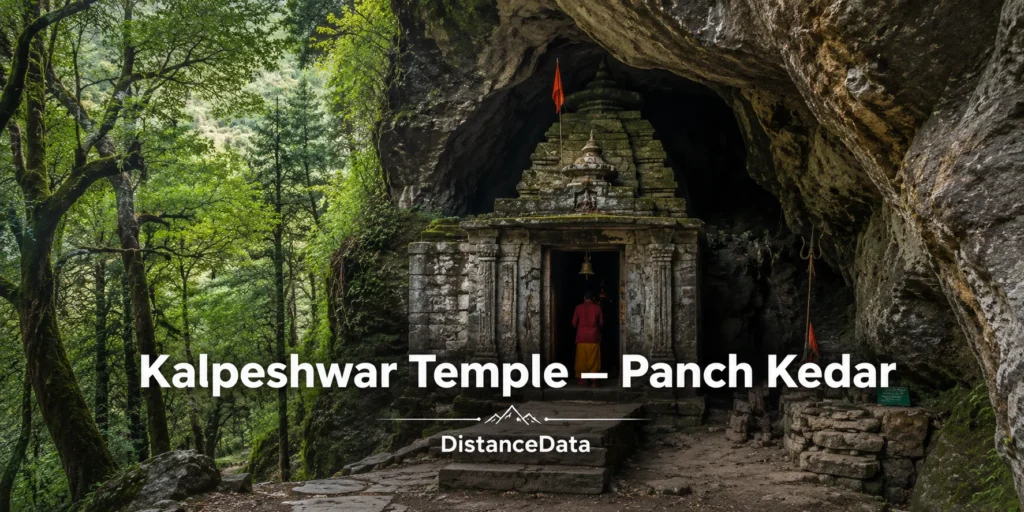
A gentle 2 km trek from Urgam village makes Kalpeshwar the most peaceful and accessible spiritual experience of the five. Kalpeshwar remains open throughout the year. Most Panch Kedar yatris start here because of its accessibility and gentle terrain. The temple sits in a small cave, adding a unique character compared to the other four open-air shrines.

Rudranath — The Most Challenging Kedar
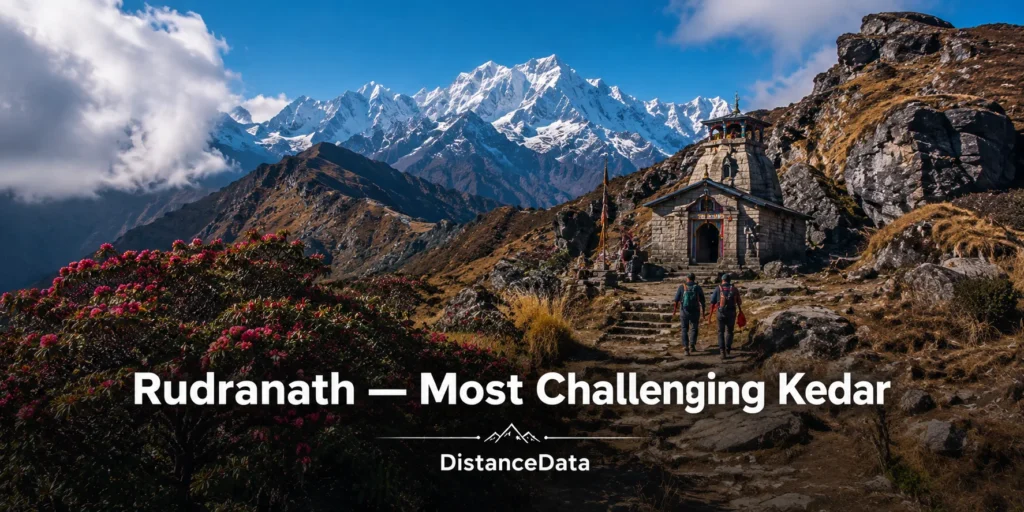
Rudranath is considered the most challenging of the Panch Kedar treks. The journey involves a 20 km trek through dense forests and rocky terrain, demanding a good level of fitness. The trail passes through beautiful oak and rhododendron forests, alpine meadows, and rocky high-altitude terrain. The remote location of Rudranath means fewer facilities along the trail — carry sufficient food and water.
Tungnath — The Highest Shiva Temple in the World
Tungnath is the world’s highest Shiva temple. A relatively easy 4 to 5 km trek from Chopta leads to this sacred site, rewarding your efforts with unparalleled views. Chopta itself is called the Mini Switzerland of India for its meadows and mountain views. The Tungnath trek is the shortest and most scenic of the five — many travelers do it as a standalone day trek from Chopta.

Madhyamaheshwar — The Hidden Kedar
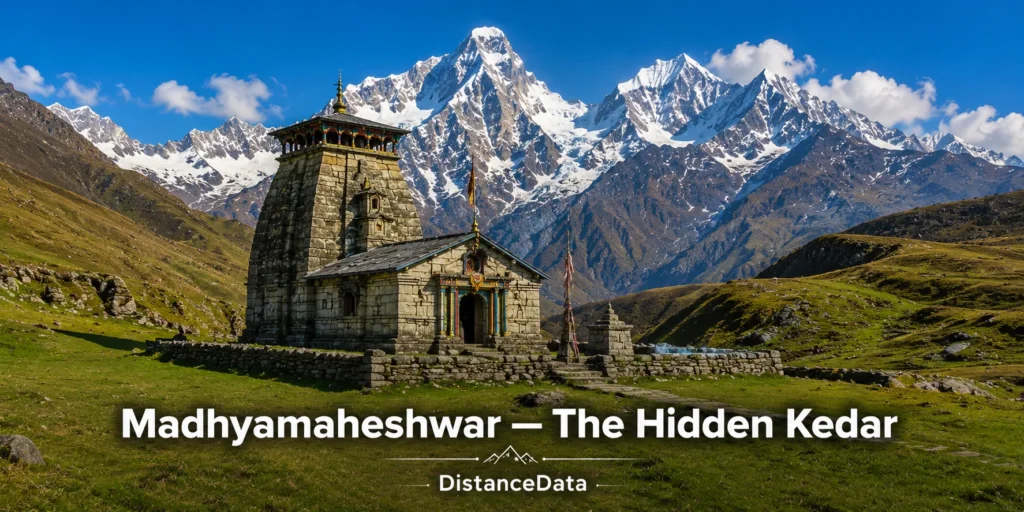
A moderate 19 km trek from Ransi village takes you to Madhyamaheshwar, a serene location that offers peace and tranquility. The trail passes through Bantoli village and several beautiful bugyals — high altitude meadows — before reaching the temple. Madhyamaheshwar is one of the least crowded of the five temples, making it the most peaceful stop on the entire circuit.
Kedarnath — The Grand Finale
Kedarnath is the most famous of the five Kedars and the fitting culmination of the entire yatra. The 16 km trek from Gaurikund is the most demanding and most rewarding. The ancient stone temple at 3,583 meters, backed by the Kedarnath and Kedar Dome peaks, is one of the most iconic sights in all of the Himalayas.

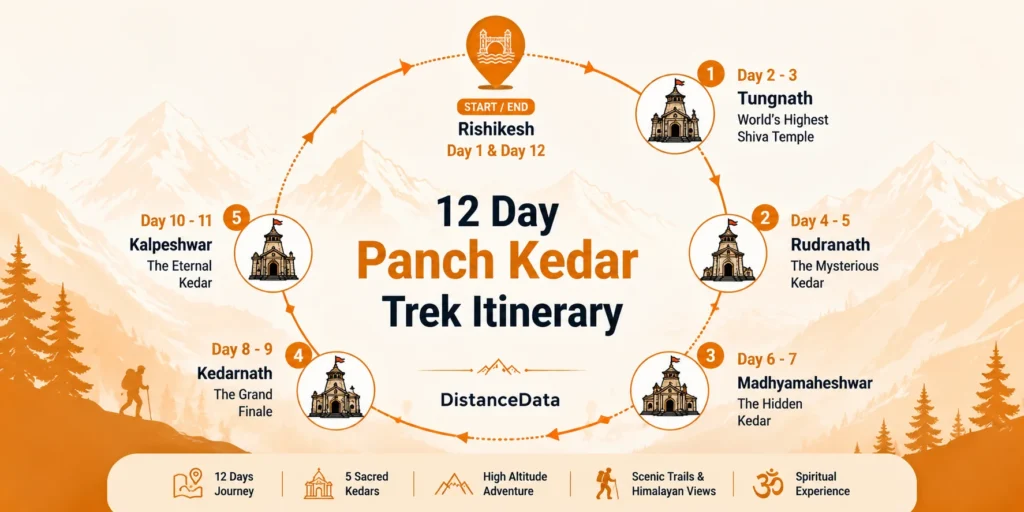
Day-Wise Panch Kedar Trek Itinerary (12 Days)
| Day | Plan | Distance |
|---|---|---|
| Day 1 | Rishikesh to Pipalkoti | Drive 195 km |
| Day 2 | Pipalkoti to Urgam, trek to Kalpeshwar, back to Urgam | 2 km trek |
| Day 3 | Urgam to Sagar village (Rudranath base) | Drive 50 km |
| Day 4 | Sagar to Panar via Lyuti Bugyal | 10 km trek |
| Day 5 | Panar to Rudranath, darshan, camp nearby | 10 km trek |
| Day 6 | Rudranath to Sagar descent, drive to Chopta | Trek + Drive |
| Day 7 | Chopta to Tungnath darshan, back to Chopta | 8–10 km trek |
| Day 8 | Chopta to Ransi, begin Madhyamaheshwar trek to Bantoli | 9 km trek |
| Day 9 | Bantoli to Madhyamaheshwar darshan, overnight | 10 km trek |
| Day 10 | Madhyamaheshwar to Ransi descent, drive to Gaurikund | Trek + Drive |
| Day 11 | Gaurikund to Kedarnath, darshan, overnight | 16 km trek |
| Day 12 | Kedarnath to Gaurikund descent, drive to Rishikesh | Trek + Drive |
Panch Kedar Trek Difficulty: Temple-Wise Comparison
Not all five treks are equally demanding. Here is a clear difficulty breakdown so you can mentally prepare for each leg.
| Temple | Trek Distance | Difficulty | Time Required |
|---|---|---|---|
| Kalpeshwar | 2 km | Easy | 1 hr |
| Tungnath | 4–5 km | Easy to Moderate | 2–3 hrs |
| Madhyamaheshwar | 19 km | Moderate | 7–8 hrs |
| Kedarnath | 16 km | Moderate | 5–6 hrs |
| Rudranath | 20 km | Difficult | 8–10 hrs |
The Panch Kedar Trek is rated moderate to difficult. While first-timers can attempt this yatra, prior trekking experience is recommended. You should be able to jog 5 km in 30 minutes or walk 10 km in 70 minutes. Daily walking on most trek days is 6 to 8 hours.
Trek Cost and Package Pricing
During the Panch Kedar Yatra you cover a total trekking distance of 107 kilometers in a span of 12 days. Organized packages that cover all logistics, stays, meals, and guides make this complex multi-temple circuit much more manageable.
| Package Type | Cost Per Person | Includes |
|---|---|---|
| Budget | ₹18,000–₹25,000 | Basic stays, guide, permits |
| Standard | ₹28,000–₹40,000 | Stays, meals, guide, transport |
| Premium | ₹45,000–₹65,000 | All inclusive, porter, insurance |
Best Time for Panch Kedar Trek
The best time for Panch Kedar Yatra is May to June pre-monsoon and September to October post-monsoon. During these months all five temples in Uttarakhand are accessible, weather is pleasant, and you get clear photo opportunities. Avoid monsoon July to August due to landslide risks.
| Season | Months | Conditions |
|---|---|---|
| Pre-monsoon | May – June | All temples open, pleasant weather |
| Monsoon | July – August | Avoid — landslide risk, slippery trails |
| Post-monsoon | September – October | Best weather, clear views, fewer crowds |
| Winter | November onwards | Most temples close, snowfall begins |
September and October is the best window for the complete Panch Kedar circuit. Kalpeshwar remains open throughout the year — so if you miss the main season, at least one of the five Kedars is always accessible.
Temple Opening Dates 2025
Kedarnath opened on May 2, 2025. Tungnath opened on May 2, 2025. Madhyamaheshwar opened on May 21, 2025. Rudranath opened on May 18, 2025. Kalpeshwar remains open throughout the year.
These dates follow the Hindu calendar and can shift slightly every year. Always confirm opening dates before planning your travel as they are announced officially a few weeks in advance.
Important Tips for Panch Kedar Yatra
The Panch Kedar is not a single trek — it is a multi-trail, multi-valley circuit spread across 12 days. Start physical training at least 6 to 8 weeks before the yatra. The Rudranath trail is particularly demanding and should not be underestimated.
Permits are required for the Panch Kedar Yatra as it passes through protected areas. These permits help regulate footfall and ensure conservation of the region’s biodiversity. Always carry your Aadhaar card. Withdraw sufficient cash at Rishikesh or Haridwar as ATMs are not available beyond Joshimath on most routes.
Acclimatization is important — do not rush from one temple to the next without proper rest. The altitude changes dramatically between temples, and altitude sickness can catch anyone off guard.